Resources

Buy better, with the same framework we use ourselves

Whether you're buying your first home, adding an investment or working towards a development, the quality of the decision comes down to the research behind it. This is where we keep the frameworks, checklists and real client outcomes we work through with our own buyers.

Start with the 10 Fundamentals, work through the guide for your situation, then see how the strategy plays out in our case studies. If you'd like us to apply it to your search, book a free consultation and we'll take it from there.

A two-minute look at how we buy, and why the perspective matters.

Start where you are

Three paths, one process. Choose the one that sounds like you.

Buying your first home

Get clear on budget, pre-approval and the non-negotiables before you inspect a single property, so you're buying a smart first step rather than a forever home you haven't met yet.

Investing in Brisbane

Understand land-to-asset ratio, local income profiles and where value can be added, so your next purchase is chosen for fundamentals rather than headlines.

Developing or adding value

Look at subdivision, small-lot and renovation opportunities the way a developer does: what the site can become, what it costs to get there, and what that does to equity and yield.

The 10 Fundamentals

Every property we shortlist is assessed against the same ten criteria. They're the reason two houses on the same street can be very different purchases, and the framework we teach in our 10 Fundamentals video series.

Use them as a filter. If a property fails more than a couple, it usually isn't the one, no matter how good the photos are.

01

Price

Never pay a premium. Acquire below intrinsic value so there's a margin of safety from day one.

02

Location and gentrification

Assess the suburb's growth trajectory and gentrification potential, not just how it looks today.

03

Local income profile

Average weekly incomes tell you about economic strength, rental demand and who your future buyer or tenant is.

04

Distance and livability

Separation from major roads and rail, noise corridors, amenity and the everyday walkability of the address.

05

Flood risk

Check overland flow, creek and river flood exposure before you fall in love with a floor plan.

06

Land-to-asset ratio

Land value versus build value. The higher the ratio, the more of your money is in the part that appreciates.

07

Floor plan and configuration

Layout, dimensions, aspect and functionality. Good bones are hard to add later.

08

Value-add potential

Where equity can be manufactured through cosmetic uplift, reconfiguration or a larger project.

09

External space

Usability and future enhancement of outdoor areas, garaging, balconies and exclusive-use space.

10

Key variables

Slope, zoning, body corporate fees, street appeal, age and condition, and the details in the Seller's Disclosure Statement.

Watch the 10 Fundamentals series

How a purchase actually runs

Seven steps, from first conversation to the keys and beyond. The same process whether you're buying a first home or a development site.

  1. 01

    Consultation

    We start with your goals, situation, budget and finance, owning structure, timeline and what you want the purchase to achieve.

  2. 02

    Strategy brief

    Together we build a buying brief around your non-negotiables, risk profile, preferred locations and long-term objectives.

  3. 03

    Search

    Our sourcing systems, local knowledge and network surface on-market, pre-market and off-market opportunities that fit the brief.

  4. 04

    Property analysis

    Every shortlisted property is assessed against the 10 Fundamentals, including flood, zoning, body corporate and land-to-asset ratio.

  5. 05

    Inspect

    We inspect on your behalf, assess the practical details and run due diligence before you commit.

  6. 06

    Negotiate

    We handle pricing strategy, negotiation and contract terms so you can secure the right property with confidence and favourable conditions.

  7. 07

    Purchase and beyond

    We coordinate with your legal and finance team through settlement, then support the next stage through Rental Perspective or project coordination.

Buyer guides

Plain-English explanations of the things that decide whether a purchase works.

First home buyers: the fundamentals

Your first home doesn't need to be your forever home. It needs to be a smart first step. Buy strong fundamentals in the right location and you're not just purchasing a place to live, you're building the foundation for your future wealth.

Get pre-approval first so you know your genuine budget, not just what a lender will lend. Then set your criteria: the essentials, and the things you're willing to compromise on.

  • Talk to a mortgage broker and confirm what repayment you're comfortable with, not only the maximum you can borrow.
  • Set up your owning entity with your accountant or financial planner before you buy, not after.
  • Target high-demand suburbs and check future supply, flood mapping and proximity to main roads or rail.
  • Understand building, pest and finance conditions, and read the Seller's Disclosure Statement and contract properly.
  • Move during the week where you can. Waiting for the weekend puts you in the same queue as everyone else.
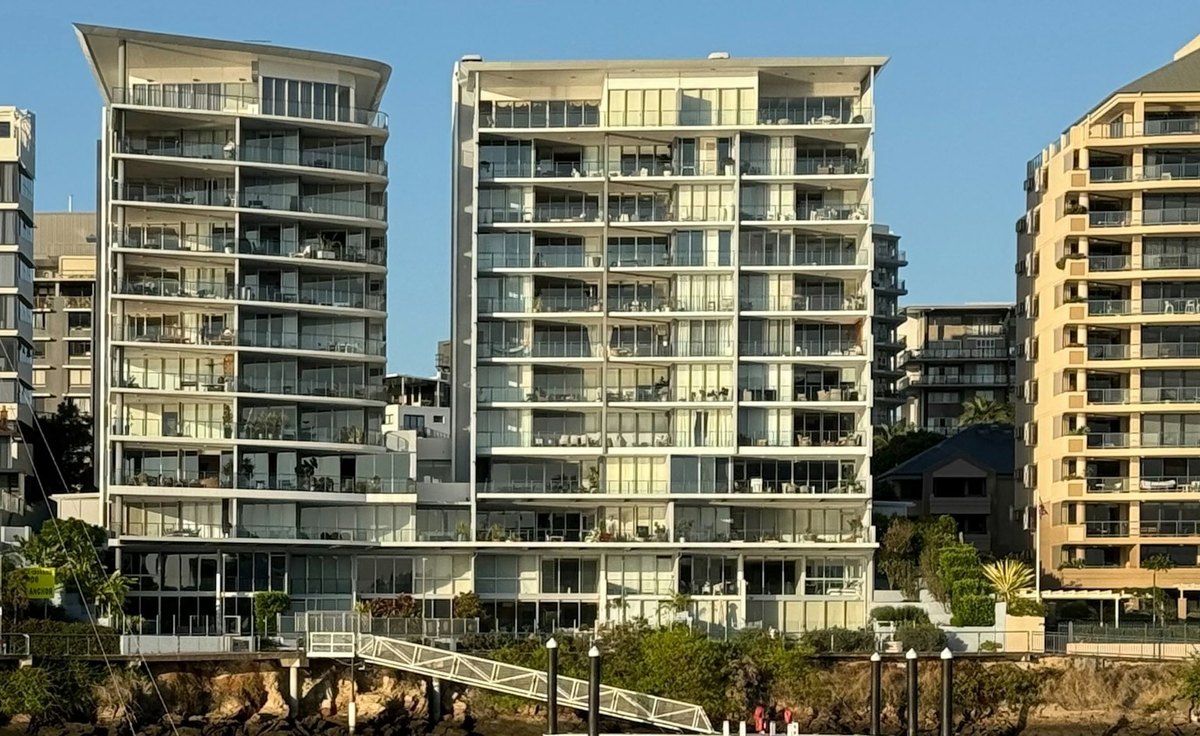
Riverside apartment buildings in Brisbane, seen from the river

Land-to-asset ratio, explained

Land-to-asset ratio is the share of a property's value that sits in the land rather than the building. A house on a well-located block carries a high ratio. A large new build on a small lot carries a low one.

Land is the part that can't be manufactured, and it's the part that tends to hold and grow value. A high ratio gives you scarcity, redevelopment optionality and a bigger margin if the market softens.

  • Compare land value against the number of dwellings on the site. One dwelling on a large block is a different asset to six on the same land.
  • Use the Queensland land valuation search to see the official land value behind a property.
  • Check what the site could become under the Brisbane City Plan: small lot, duplex, townhouses, or nothing at all.
  • A low ratio isn't automatically bad, but you need a clear reason for paying for the building rather than the dirt.
  • In smaller complexes, older brick walk-ups often carry a better ratio than newer stock.

High land-to-asset ratio

Most of the value is in the land: scarcity, optionality, stronger downside protection.

Low land-to-asset ratio

More of the value is in the building, which depreciates and can be rebuilt on other land.

Illustrative only. Ratios vary by property, suburb and improvements.

What due diligence actually covers

Due diligence isn't a box to tick after you've decided. It's how you find out whether the property you're about to buy is the property you think it is.

We run it on every shortlisted property before an offer is made, and again through the contract conditions.

  • Flood: overland flow, creek and river mapping, plus the practical question of how you'd get in and out during a weather event.
  • Planning: zoning, overlays, easements and any approvals attached to the site.
  • Building and pest: structural issues, previous renovations, termites and unapproved work.
  • Contract: the Seller's Disclosure Statement, special conditions, settlement terms and inclusions.
  • Money: body corporate records, sinking fund health, levies and any special resolutions coming up.
  • Comparables: recent sales of genuinely comparable properties, so you know what the price actually means.
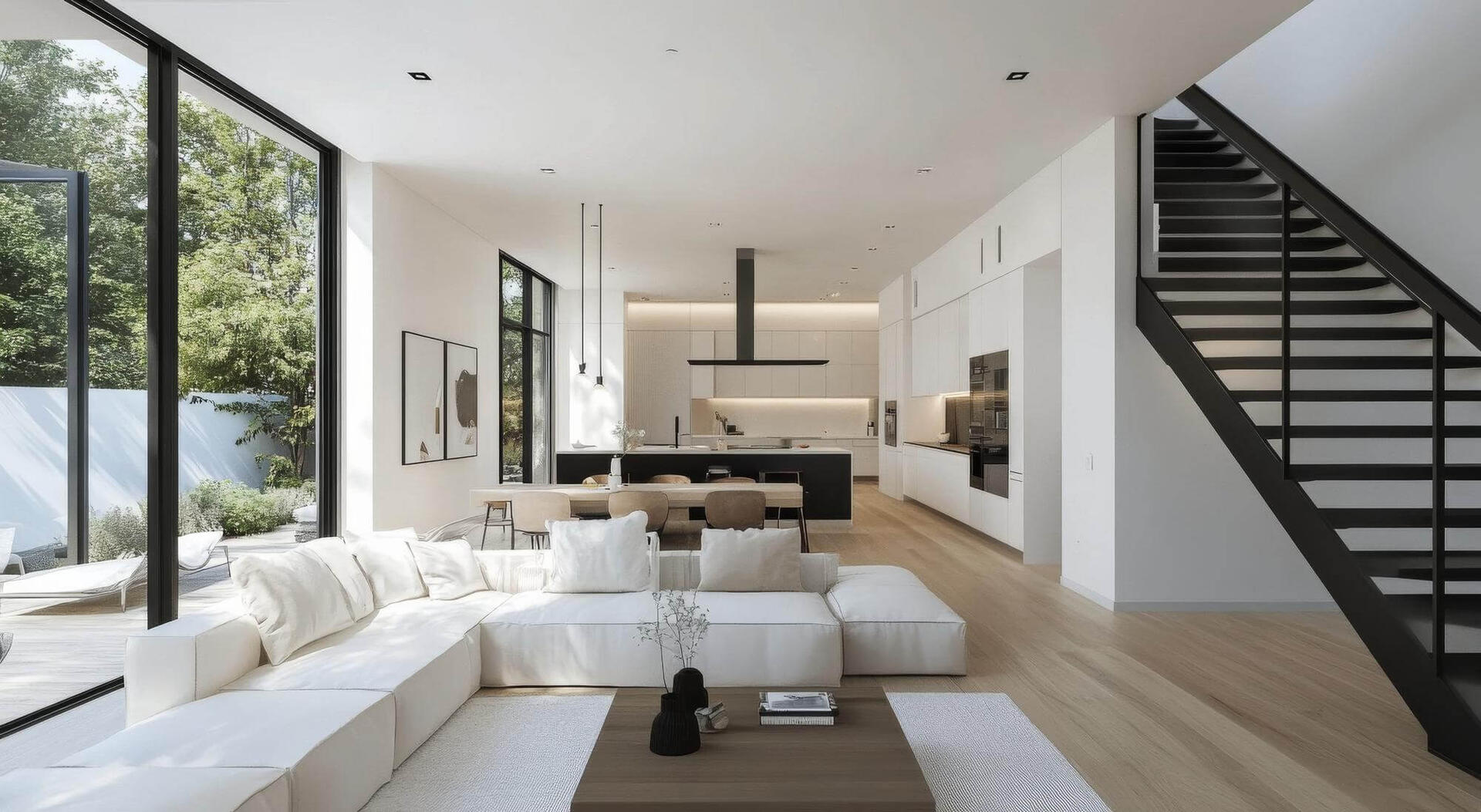
An open-plan living room looking out to a garden

Where equity comes from

There are two ways equity appears in a property: the market moves, or you create it. Waiting for the first is a strategy. Manufacturing the second is a skill.

The most reliable value-add is often cosmetic and structural rather than grand: a better layout, a refreshed kitchen and flooring, improved light and street appeal.

  • Buy below intrinsic value first. Renovation can't rescue a purchase price that was already too high.
  • Look for layouts that can be reconfigured, such as a two bedroom that can become three without moving walls.
  • Budget the renovation before you buy, including the holding costs while it's empty.
  • Keep the spend proportionate. A modest uplift in the right property often outperforms a premium renovation.
  • Get a valuation after the work is complete so the equity is usable for the next step.
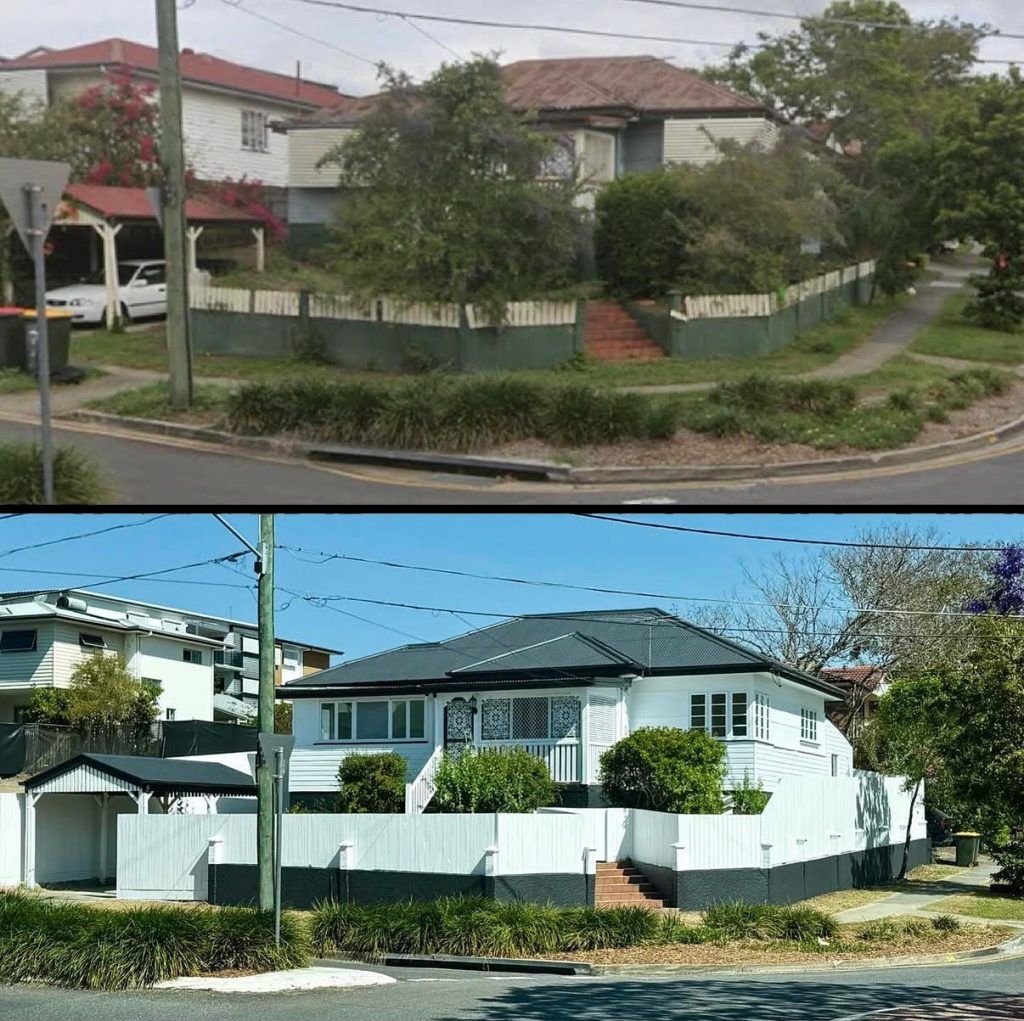
Before and after of a Brisbane home renovation

Offers, auctions and negotiation

Price is only one term. Finance dates, building and pest windows, settlement length and deposit all change how attractive an offer is to a seller.

A sharp offer with clean conditions is often worth more to a vendor than a higher number that carries risk.

  • Ask what the seller actually needs: a quick settlement, a long one, certainty, or a particular date.
  • Use conditions to protect yourself, but keep them as tight as the property genuinely allows.
  • At auction, set your ceiling before you go and don't negotiate against yourself in the moment.
  • Put the offer in writing with a clear expiry, and keep the agent talking to you.
  • Never let emotion set the price. There is always another property.
Nick and Nathan talking with a client on a veranda
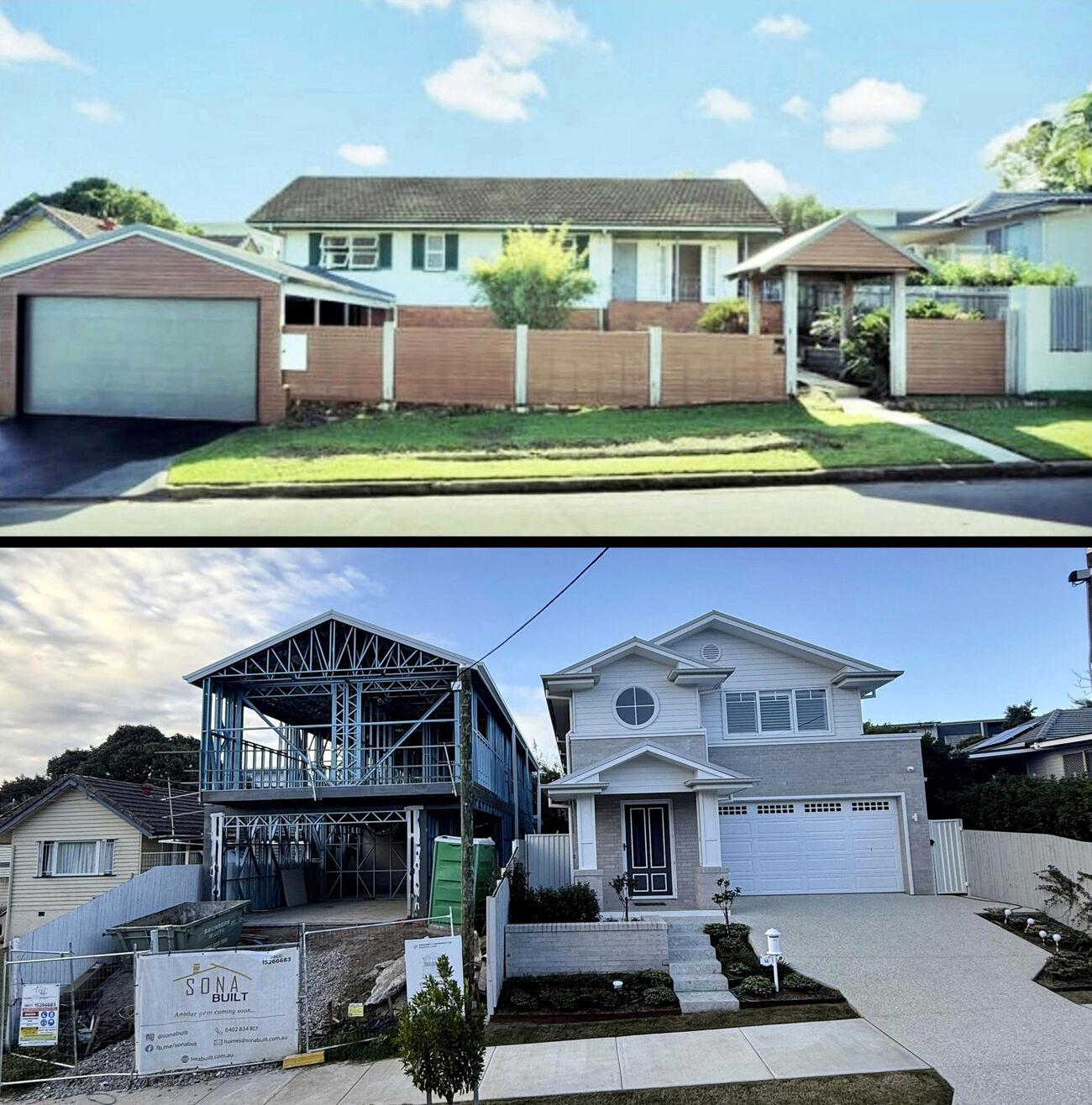
Before and after photographs of a Brisbane property, showing the original home and the completed build
Before and after on one of our Brisbane projects.

What value-add looks like

Buying well is half of it. The other half is what you do next: the layout change, the cosmetic uplift, the landscaping that lifts street appeal, or the site that can carry another dwelling.

These are real Property Perspective projects. Same site, different outcome.

Read the value-add guide

Repayment calculator

Run the numbers before you inspect. Enter a purchase price, deposit and interest rate to see the repayment week to week, fortnight to fortnight, month to month or year to year. Then see what a higher rate would cost, and what buying the same property for less would save.

Open the calculator

Watch and learn

Our YouTube channel covers the 10 Fundamentals one at a time, plus buyer tips, market commentary and project walkthroughs. If you're starting from scratch, the Fundamentals series is the place to begin.

Below are recent project walkthroughs from the team.

14 Crump St,Holland Park West, Brisbane
34 Wellington St,Coorparoo, Brisbane
51 Burrai St,Morningside, Brisbane
32 Hood St,Sherwood, Brisbane
80 Denman St,Greenslopes, Brisbane

The 10 Fundamentals

One short video per criterion, from price and location through to zoning and body corporate fees.

Buyer tips and checklists

Pre-approval, sourcing off-market, structuring an offer and the mistakes that cost buyers money.

Projects and past purchases

Renovations, subdivisions and developments we've completed, and the thinking behind each one.

Property Perspective QLD on YouTube

Free checklists

Print these, or keep them on your phone for inspections.

Before you start looking

  • Pre-approval in place and repayments you're comfortable with
  • Owning entity and structure confirmed with your accountant
  • Budget including stamp duty, legals, building and pest, and any works
  • Target suburbs and the reasons behind each one
  • Your essentials versus what you'll compromise on
  • A single point of contact for finance, legals and inspections

At the inspection

  • Flood mapping and overland flow checked before you inspect
  • Main road, rail and flight path noise at different times of day
  • Aspect, natural light and cross ventilation
  • Signs of movement, damp, termites or unapproved work
  • Layout: can it be improved without moving walls?
  • Body corporate records and levies, if applicable
  • Recent comparable sales, so you know what it's worth

Case studies

Real purchases, real numbers. Each case study walks through the acquisition, the strategy and the outcome, including what we'd do differently.

Enter your name and email to read the full write-up. We'll only use it to send you the occasional property insight, and you can unsubscribe at any time.

Read the case studies

Common questions

Do I need a buyer's agent if I'm buying my first home?

Not always, but the stakes are high and the process is unfamiliar. A buyer's agent shortens the search, runs the due diligence and negotiates on your behalf. The free consultation is where we work out whether that's worth it for you.

What areas do you cover?

Brisbane's inner and middle ring, from Toowong and West End through Coorparoo and Bulimba to Ascot and Chermside, plus selected South East Queensland locations.

How are you paid?

A commencement fee that's credited toward the final success commission, then a success commission payable when the purchase becomes unconditional. We'll set it out clearly before you engage us.

Can you help after settlement?

Yes. Renovation and project coordination through Property Perspective QLD, and property management through Rental Perspective.

Do you help with development sites?

We do. Subdivision, small-lot and multi-dwelling sites are a core part of what we buy, and the case studies show how the numbers work.

Is the content here financial advice?

No. It's general information about how we assess property. Talk to your accountant, broker or financial adviser about your own situation.

Start your property journey with confidence.

Book a Free Consultation